
What an in-row cultivator is – and how it differs from inter-row hoeing
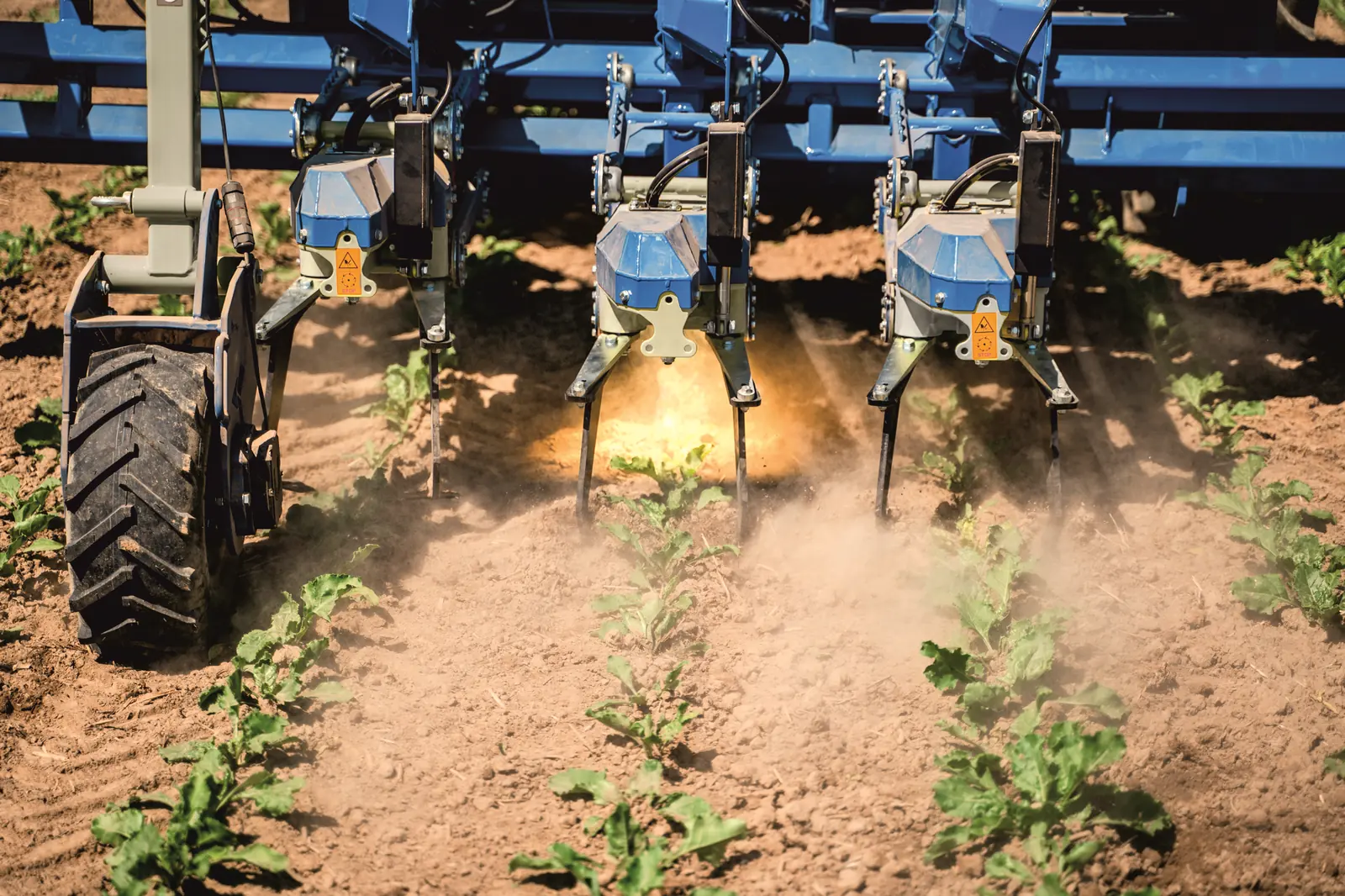
Every row crop has two problem zones. One lies between the rows, the other lies inside the row – in the narrow band directly above the crop plants. Classic cultivators only solve the first problem: they pull rigid shares through the open space between two rows and leave the band above the row untouched. Yet this is exactly where weeds grow most stubbornly, because they find the same good conditions as the crop itself and are shaded by it.
An in-row cultivator takes over that band. To do so it has to distinguish between crop and weed in fractions of a second and guide its tools around every single plant. That is impossible without sensors – which is why in-row weeding only became practical with camera-based detection and artificial intelligence.
The VarioCHOP AI comes in two build types: in-row only – with an existing cultivator handling the space between the rows – or in-row plus inter-row for full-surface cultivation in a single pass. If you already work with a VarioCHOP inter-row cultivator, you simply add the part that previously had to be done by hand.
How the camera detection works inside the row
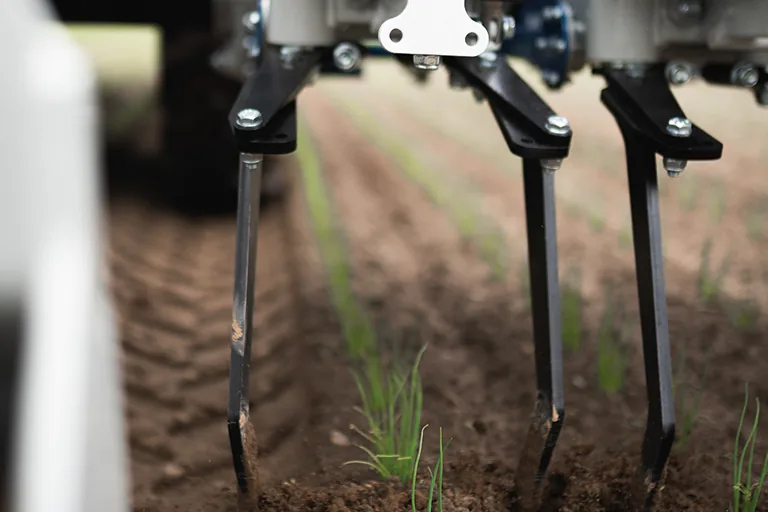
A camera sits above every row. It takes several images per plant and detects the root position, not the leaf. In the field that difference is decisive: leaves move in the wind, they overhang neighbouring plants and they hide weeds. The root, by contrast, stays still and marks exactly the point the knives have to spare. As a result, wind is not an issue, and weeds are also removed underneath the crop's leaves.
Depending on the forward speed, the camera sends the signal to open and close the hoeing knives – up to three times per second. An additional 3D camera measures the height of the stand, and one electric motor per row adjusts the working height individually. The hydraulic side shift automatically aligns itself with the average of all rows, so the implement tracks cleanly even when the drilled rows are slightly offset.
No calibration is required: select the crop, hitch up, drive off. To make detection independent of daylight, integrated flash lights and LED illumination are part of the system. Plants are detected at any position of the sun and at night as well – a practical advantage when the window for a hoeing pass is tight. And the system is robust: even in dense weed pressure, irregular stands or overgrowth, the AI reliably identifies the crop plants.
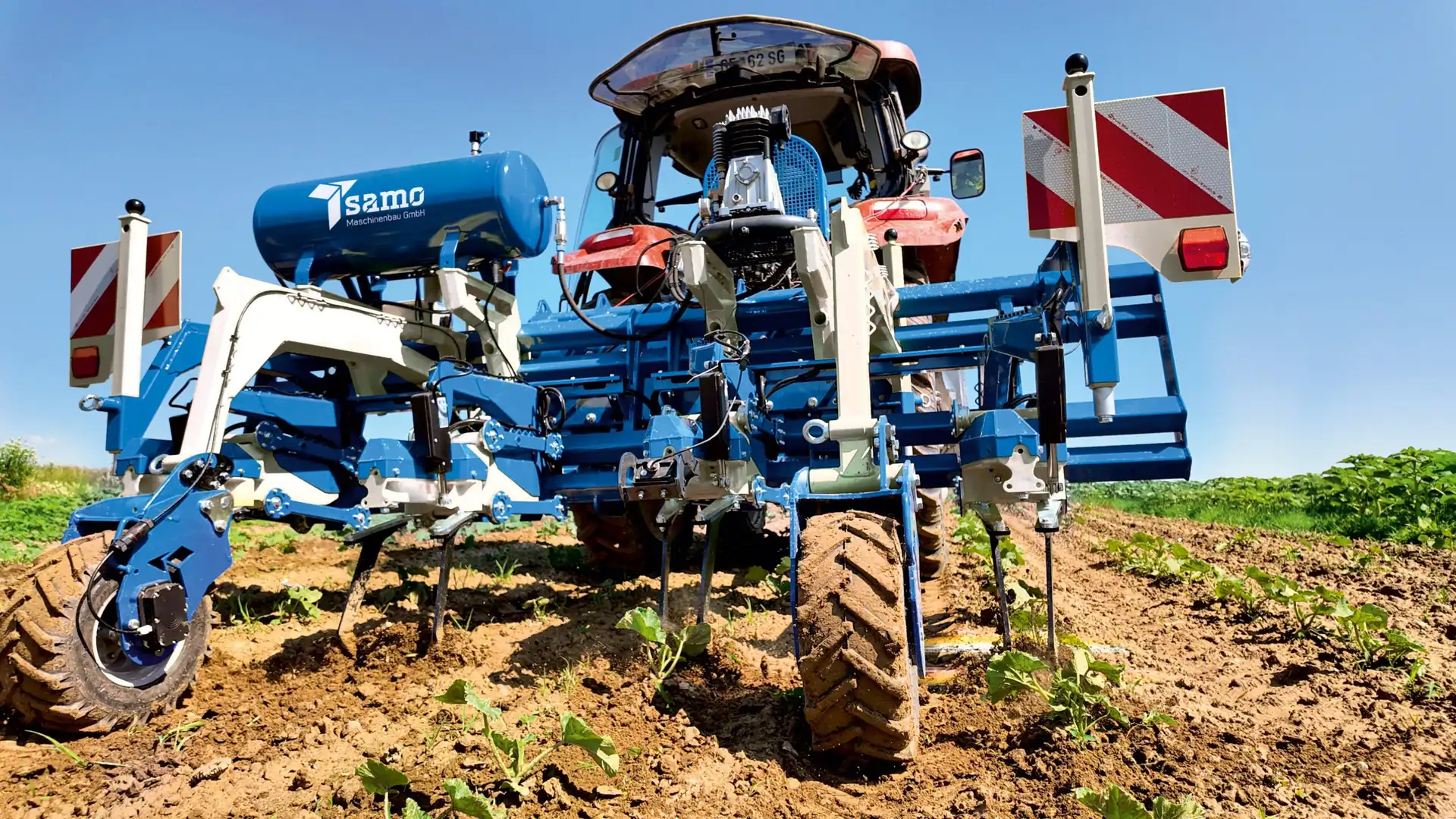
You can start early: weeding is possible from the two-leaf stage onwards. The earlier the first pass runs, the smaller the weeds and the less competition the crop faces in its most sensitive phase. More on the interplay of camera, AI and field practice can be found on the page about the VarioCHOP AI with AI plant detection.
Which crops and row spacings suit in-row weeding
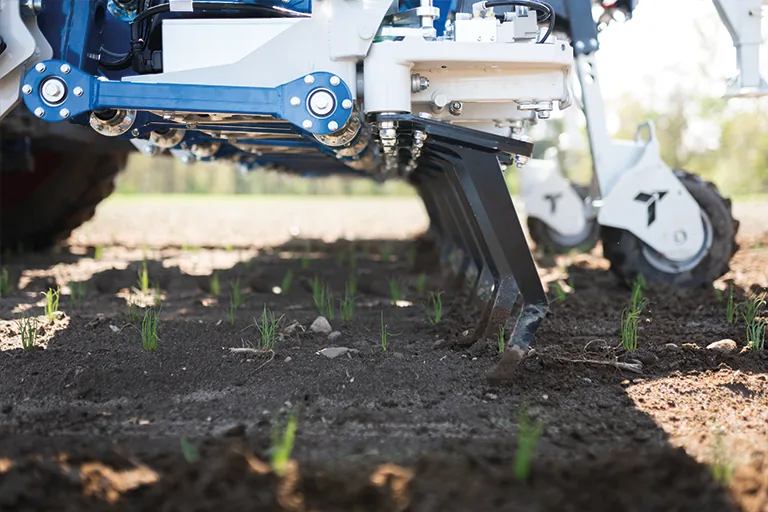
The range is wider than most people expect. Currently in use are sugar beet, pumpkin, corn, onion, garlic, cabbage, peanuts, rice, vegetables and lettuce, plus around 80 further crops – more than 100 crops in total. These include robust field crops such as potatoes, sweet potatoes and sunflowers as well as more sensitive plants: broccoli, cauliflower, fennel, tomatoes, strawberries. Speciality crops such as oregano, thyme, lemon balm, mint and hemp can be cultivated too.
If a crop comes along that the system does not yet know, it is trained. From the first camera scan to a ready-to-use AI model usually takes about six hours. For farms with changing rotations or contract growing, that is the decisive point: the machine grows with the cropping plan.
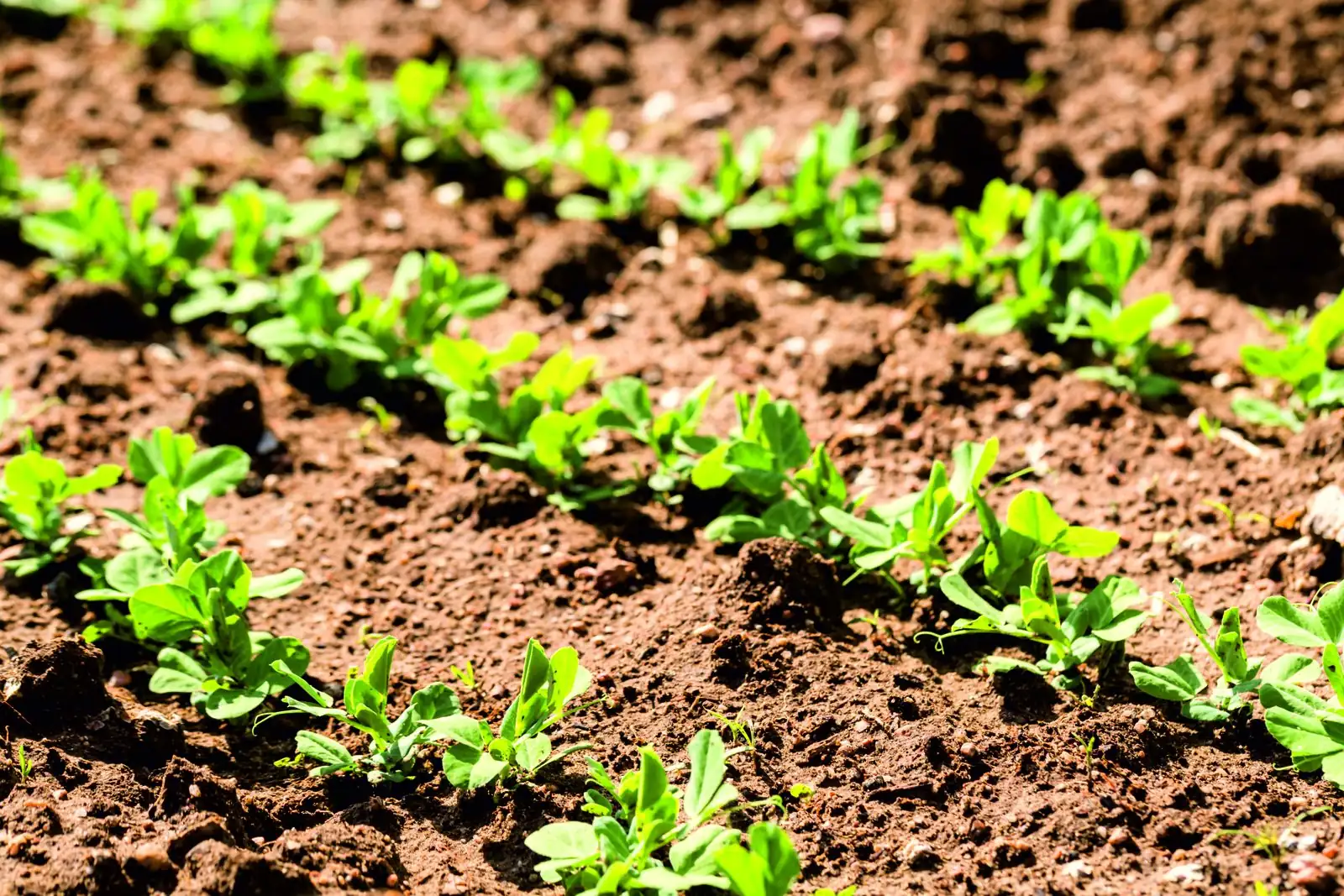
Row spacing is equally flexible: the system can be set continuously from 15 cm upwards, and all units are easy to move. Changing from 50 to 75 cm takes about half an hour. Inside the row, the technology works from around 8 cm spacing between the individual plants. The machine is configurable from 1 to 16 rows, including individual spacings within a single implement.
That covers the row widths common in practice: corn usually stands at 70 to 75 cm, sugar beet at 45 to 50 cm, soy between 30 and 45 cm, sunflower at 50 to 75 cm, and field vegetables such as lettuce, fennel and cabbage at 30 to 50 cm. Pumpkin needs considerably more room at 100 to 200 cm. Which spacing suits your crop and your existing drilling equipment is covered in detail in the guide on choosing the right row spacing.
Working speed and area output in the field
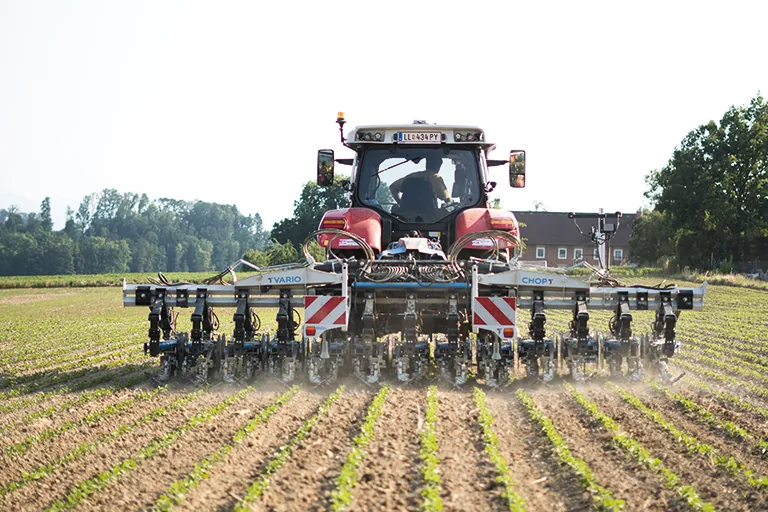
Weeding inside the row is precision work, yet the acres still have to move. In 6-row sugar beet, the in-row setup reaches up to 5 km/h and therefore around 1 hectare per hour – including cultivation directly inside the row, so without any subsequent hand work in the band. Sugar beet is the demanding case here: narrow rows, small plants, little tolerance.
For comparison: a purely mechanical cultivator such as the VarioCHOP works between the rows at speeds of up to 19 km/h and, at a working width of 3 metres, realistically achieves 3 to 5 hectares per hour including turning times. Combining both systems therefore makes sense: high area output between the rows, precise AI work in the band above the row.
Because detection also works at night, the usable time window effectively doubles. Anyone who has to hoe during a dry spell or is waiting for a short weather window can simply keep going. Slopes are no obstacle either: every unit controls its own height, which keeps cultivation even across the full working width.
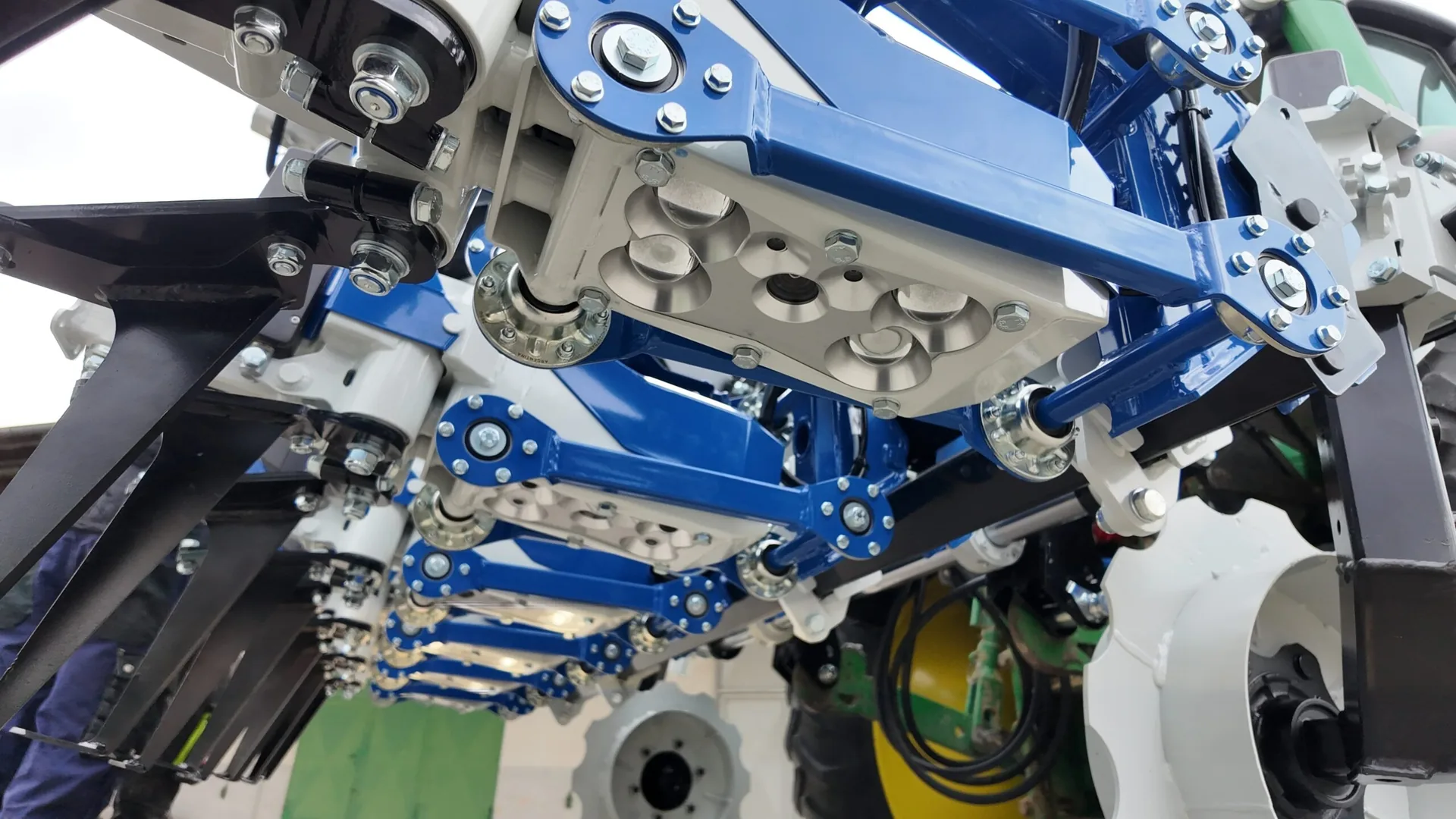
This video shows what it looks like in the field, filmed during our operations in Austria, Germany and abroad:
What an in-row cultivator saves compared to hand weeding
The arithmetic is the real reason in-row technology gets bought. A person working with a hoe by hand covers 50 to 150 square metres per hour, depending on crop and soil. One hectare is therefore a full working day – per person. Across a season with several passes, sugar beet adds up to 60 to 90 working hours per hectare, depending on weed pressure.
Full costs for an assistant in Austria and Germany, including social contributions, usually range from 15 to 22 euros per hour, and more for seasonal peak staff. That amounts to 900 to 2,000 euros in pure labour costs per hectare and season. A mechanical cultivator, by contrast, needs 3 to 5 machine hours per hectare and season and costs roughly 25 to 50 euros per hectare including tractor and driver.
In-row weeding attacks exactly the part where hand work used to be unavoidable: the band above the row. Up to 90 % of manual hoeing work is eliminated. Depending on crop and stand, a 6-row machine can replace up to 60 workers. On average we see savings of 70 to 100 % among our farmers – even on a few hectares that means several thousand euros per year.
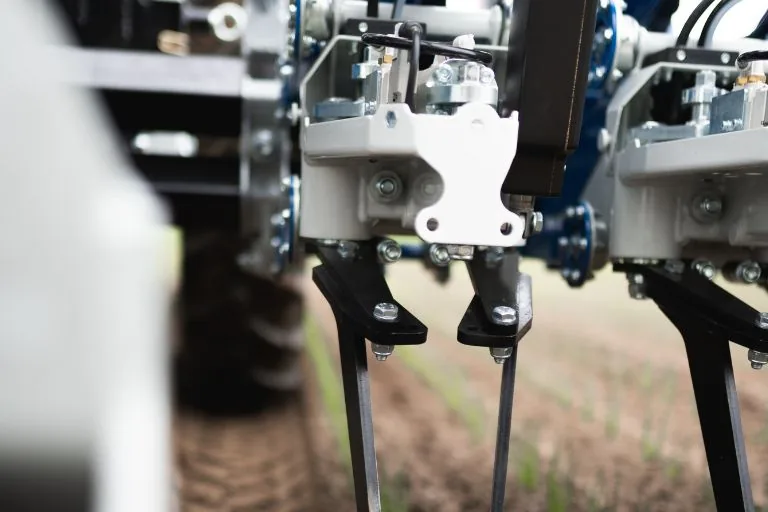
Conventional farms gain a second effect: mechanical hoeing normally saves up to 50 % of herbicide costs, because only the band above the row still has to be treated. In-row technology can replace that remainder as well. For organic farms, which are not allowed to use herbicides at all, mechanical weeding is the only economically viable solution for larger areas anyway. The full comparison with hourly rates and worked examples is in the article on cultivator versus hand weeding.
Mounting on the tractor and day-to-day operation
The entry barrier is deliberately low. GPS and ISOBUS are not strictly required – GPS is helpful but not a precondition. Power can be supplied directly from the tractor battery. That makes the technology usable on older tractors too, and it is not tied to a particular tractor brand.
Settings are made on the supplied tablet or on any Android device: working depth as well as the opening and closing point of the knives are adjusted in a few clicks. Calibration is not needed – the crop is picked from a list and off you go. Several headstocks are available for mounting: the FX headstock for front and rear mounting, the SX front headstock whose centre of gravity sits around 32 cm closer to the tractor, and the RG-X “RearGuidance” steering headstock, which uses two hydraulic cylinders plus a steering cylinder to adjust the implement at an angle to the row – useful when working across slopes.
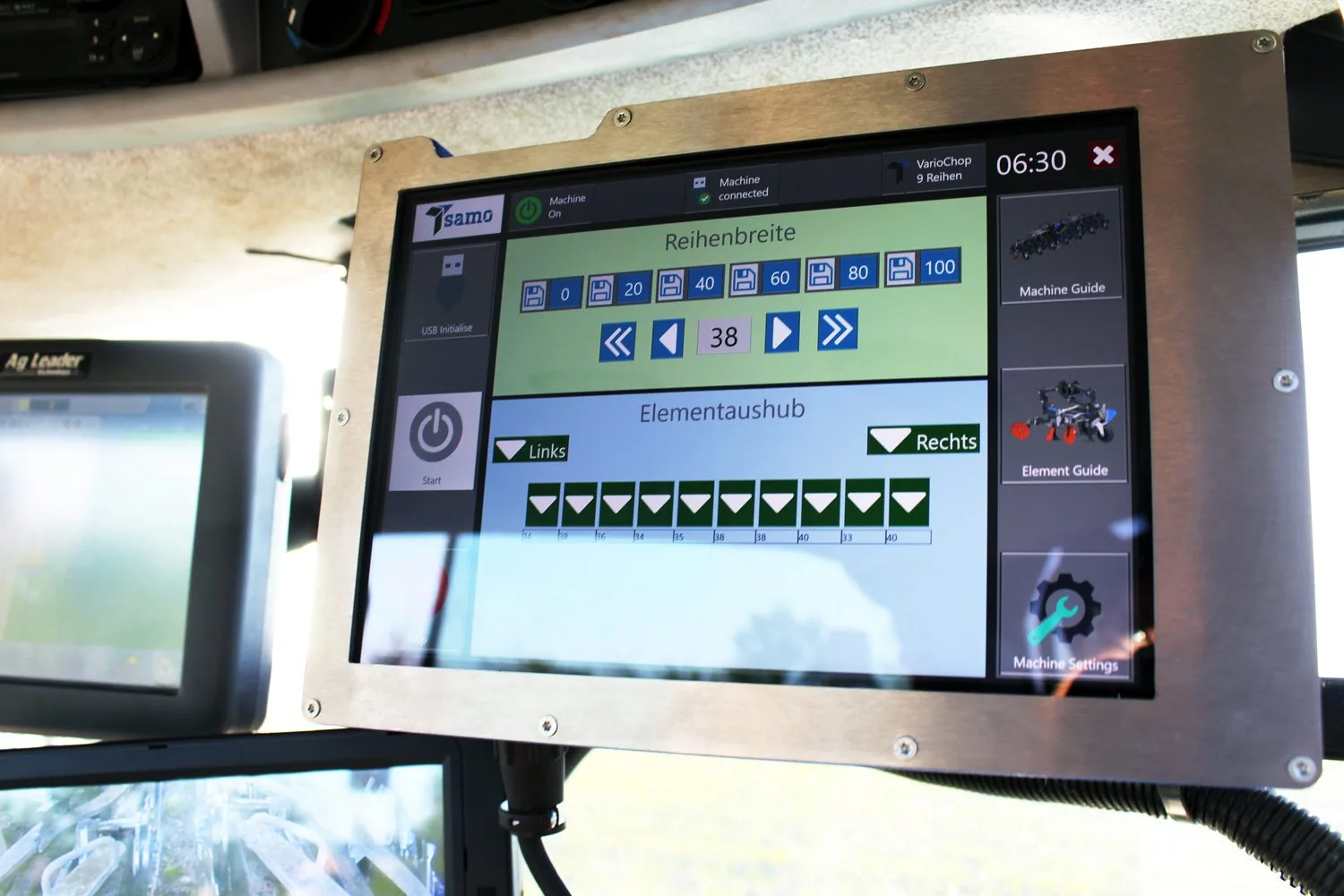
For larger working widths and more shift travel there are the SG-X and EG-X linear shifting frames as well as the LG-X shifting frame with a total of 64 cm of travel via a parallelogram. For service we rely on personal support and remote assistance over the internet – also during the season, when things have to move fast.
Attachments and build variants for the in-row cultivator
An in-row cultivator rarely travels alone. Depending on crop, soil and growth stage, additional tools refine the result – many of them mounted and adjusted without tools:
- Finger weeder: removes weeds inside the row mechanically, mounted as close to the share as possible to prevent drift on slopes. Height, contact pressure and row spacing are easy to adjust.
- Parallelogram-guided harrow: works across the full surface, between the rows or on the row. Aggressiveness and contact pressure adjust without tools.
- Element-guided harrow: always fixed in the same position, which makes it particularly good at combing out weeds inside the row.
- Crop protection disc and leaf guard plate: protect the crop from being buried and guide the leaves of larger crops cleanly past the implement.
- Precision cutting disc: moves the soil in front of the share away from the plant – ideal for small, sensitive crops; mounted the other way round it produces a ridging effect.
- Knife roller: chops mulch material ahead of the shares and prevents blockages; self-cleaning and split in two halves.
- Feeler wheel and bar support wheel: for accurate depth guidance; the feeler wheel adjusts without tools between 5 and 50 mm working depth.
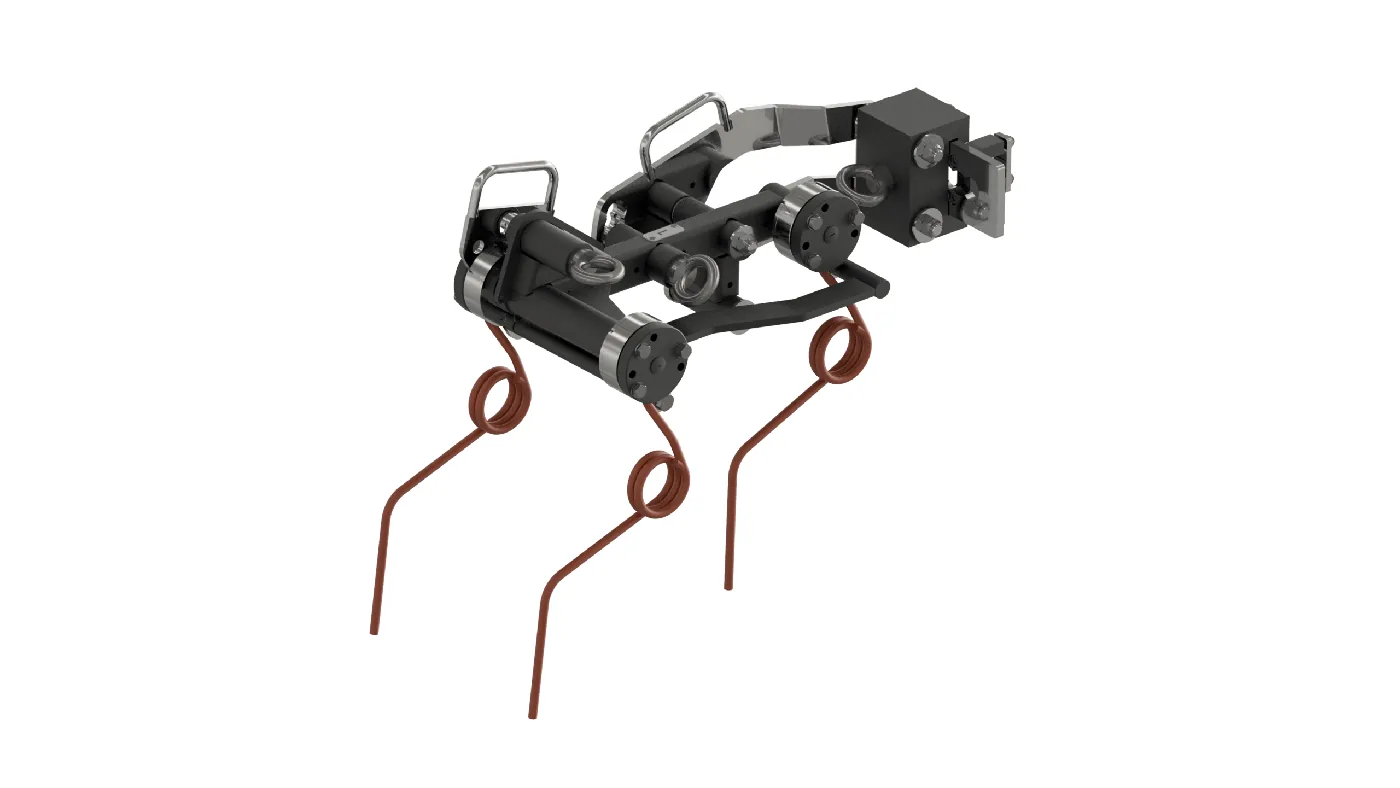
If you want to compare the individual tools and their applications, the full overview is available under cultivator attachments and accessories. For the space between the rows it is also worth looking at the patented band width adjustment of the VarioCHOP and the X-ADJUST system, which shifts any row width from 45 to 75 cm hydraulically and continuously.
Buying decision: when an in-row cultivator pays off
The rule of thumb from practice: from roughly 15 to 25 hectares of row crops per year, owning a cultivator clearly pays off against pure hand work – provided you farm the area yourself and actually use the implement for several passes per season. A farmer from Tulln puts it this way for his own farm: “Even at around 15 to 20 ha of organic sugar beet the machine pays for itself in 4 years.”
On smaller areas, shared use through a machinery ring or a contractor may make more sense. Another lever is investment funding for weeding technology – in Lower Austria it is currently possible to apply for 20 % funding on hoeing technology. All the other questions to settle before purchasing – number of rows, headstock, drilling equipment, crop rotation – are summarised in our guide to buying a cultivator.
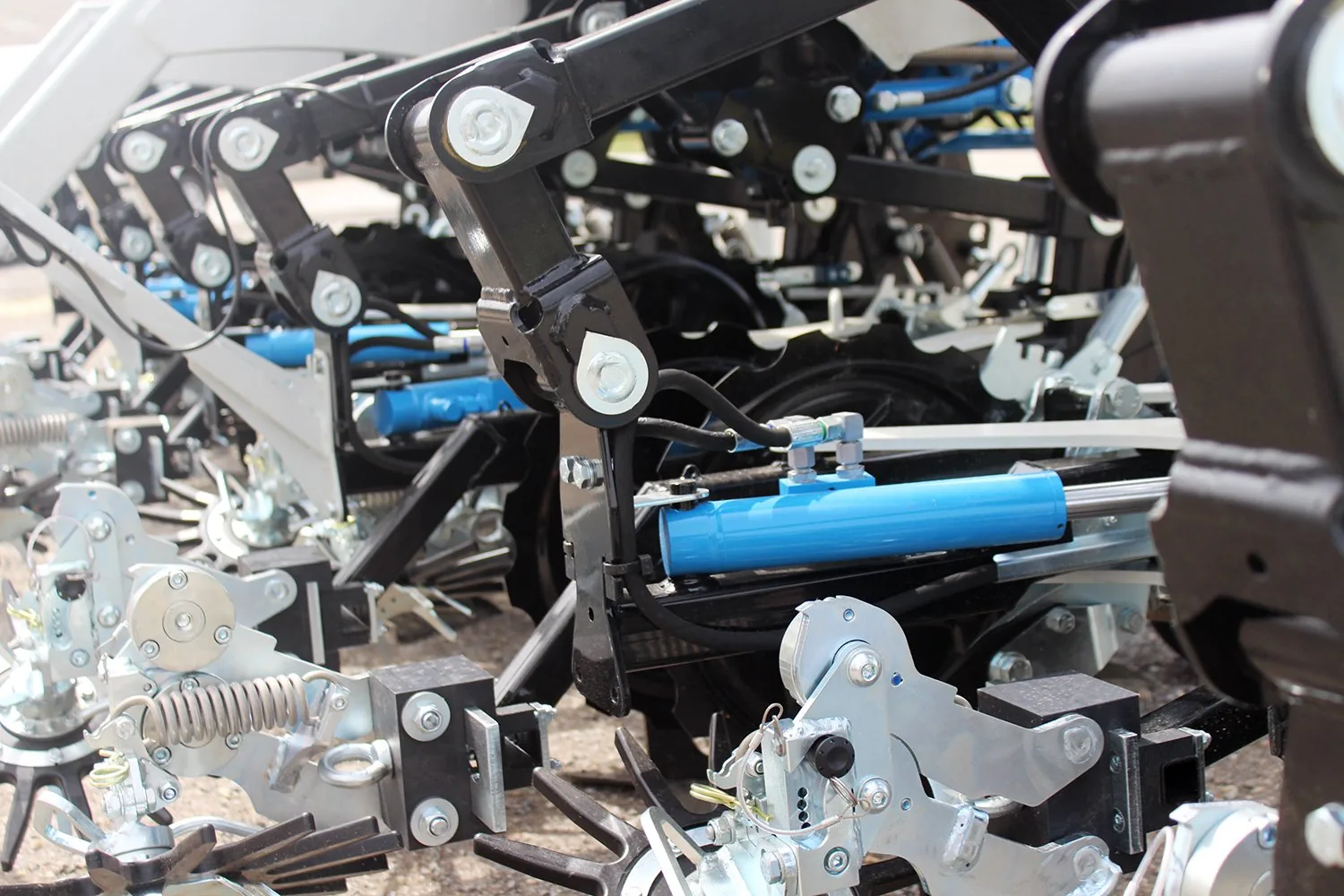
This is not prototype technology: developed together with our partner Ullmanna, it is in use in many European countries and has been travelling the world since 2024, backed by experience from more than 20,000 hectares. Among other awards it won the Nextcelerator 2022, took silver at MassChallenge Switzerland, won the AIL Austria 2023 and received the GRAND PRIX of Tech Agro 2024.
In the end, though, only your own field convinces. At a live field demonstration you see in a few minutes what no brochure can show: how precisely the camera hits the crop, how much weed in the band actually disappears and how quickly the implement adapts to your own row width.
Frequently asked questions about the in-row cultivator
What is the difference between in-row weeding and inter-row weeding?
Between the rows, a classic cultivator works with rigid shares in the open space between two crop rows. In-row weeding additionally treats the band directly above the row, i.e. the strip between the individual crop plants. The VarioCHOP AI is available in two build types: in-row only, or in-row plus inter-row for full-surface cultivation.
How does an in-row cultivator know where it is allowed to hoe?
A camera sits above every row, takes several images per plant and detects the root position – not the leaf. Depending on the forward speed it sends the signal to open and close the hoeing knives, up to three times per second. An additional 3D camera measures the height.
Does in-row weeding also work at night or in low sunlight?
Yes. Thanks to integrated flash lights and LED illumination, plant detection works at any position of the sun and at night as well. This considerably extends the window in which you can hoe.
What is the minimum row spacing for in-row weeding?
The system can be set continuously from 15 cm row spacing upwards, and all units are easy to move. Changing from 50 to 75 cm takes about half an hour. Within the row, the technology works from around 8 cm spacing between the plants.
Which crops can an in-row cultivator handle?
Currently sugar beet, pumpkin, corn, onion, garlic, cabbage, peanuts, rice, vegetables, lettuce and around 80 further crops, including many herbs – more than 100 crops in total. A completely new crop is usually trained within about six hours.
How fast can I hoe inside the row?
In 6-row sugar beet, up to 5 km/h and therefore around 1 hectare per hour are possible – including cultivation inside the row. A purely mechanical cultivator such as the VarioCHOP works between the rows at up to 19 km/h.
Does my tractor need GPS or ISOBUS for an in-row cultivator?
Not necessarily. GPS is helpful but not required. Power can be supplied directly from the tractor battery. Settings are made on the supplied tablet or on any Android device.
How much manual labour does an in-row cultivator save?
Up to 90 % of the manual hoeing work is eliminated. A 6-row machine can replace up to 60 workers, depending on crop and stand. On average we see savings of 70 to 100 % among our farmers.